January 8-10, 2027
 Greater Noida, India





India's freeze-dried food market is heating up fastâ€â€yet the products themselves are light, crisp, and built to last. From nutrient-rich fruits and vegetables to ready-to-eat curries and even gourmet Indian desserts, freeze-drying is transforming how the world experiences Indian flavours. With the market projected to triple in value over the next decade, this technology is not just a preservation methodâ€â€it's a gateway to premium exports, long shelf life, and reduced cold chain costs.
This edition of Fresh dives into why freeze-dried foods are gaining momentum in both domestic and international markets, the science behind the process, key global and Indian market trends, and the challenges ahead. You'll also discover how traditional favourites are finding new life through modern technology, creating an irresistible blend of nostalgia and innovation that's putting India on the global map for high-quality, shelf-stable foods.
India is experiencing a flavorful export revolutionâ€â€which is light, crispy, and shelf‑stable. Freeze‑dried foodsâ€â€where taste, texture, and nutrition stay intact without refrigerationâ€â€are emerging as the next frontier in Indian F&B exports, with domestic demand is already showing impressive growth.
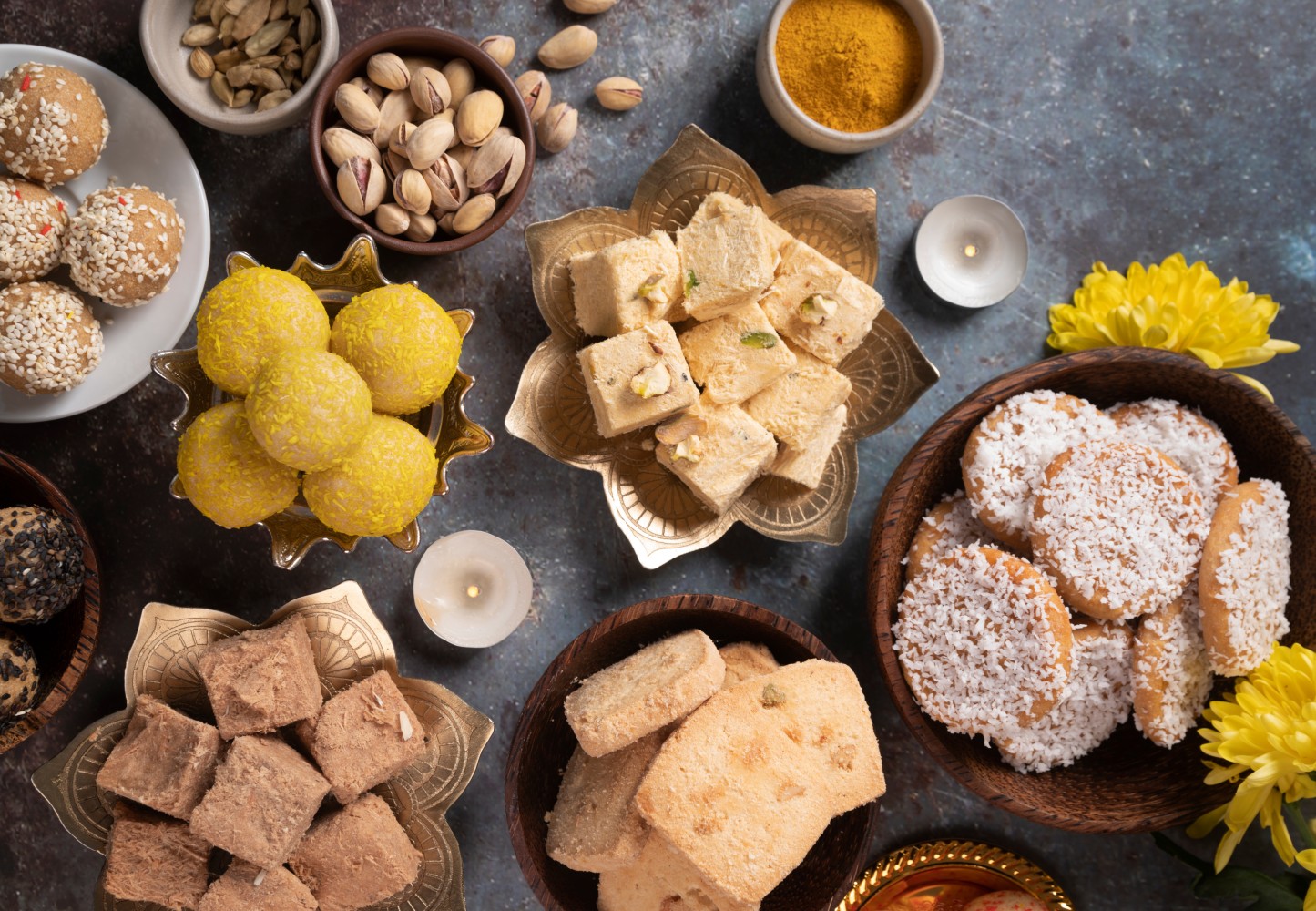
But the real cherry on top? Traditional Indian treats are being rediscovered through the freeze‑drying lens. A case in point is Gujarat's booming micro‑industry, where freeze‑dried ice‑creams, aam ras, basundi, and kulfi are now prized travel essentialsâ€â€400 to 500 kg of such products are being exported daily by over 40 local units, catering to vegetarian and Jain travelers craving home‑flavors abroad. This powerful fusion of nostalgia, convenience, and export-readiness is turning freeze-dried foods into India's crunchy new F&B export superstar.
In fact, freeze-dried foods are gaining global traction, driven by their long shelf life, light weight, and convenience. Ideal for quick meals, travel, outdoor adventures, and emergency supplies, they require no preservatives while retaining nutrition and flavour. Appealing to health-conscious consumers, they provide an easy-to-store, nutrient-rich solution that fits seamlessly into today's fast paced lifestyles.
As per historical accounts, this technique was first used in World War II for blood plasma and penicillin, to ensure safe transport in the absence of refrigerated logistics. It was subsequently applied to food preservation in the late 20th century.
What is freeze drying actually?
Freeze-drying, or lyophilization, is a dehydration process that removes moisture through sublimation, where ice turns directly to vapour. This low-temperature method effectively preserves food by retaining nutrients, flavour, texture, and heat-sensitive compounds, while freezing halts chemical reactions and microbial growth to extend shelf life.
Foods contain "free" and "bound" water; freeze-drying removes all free and some bound water, with the critical requirement that free water stays frozen throughout. This differentiates it from vacuum-drying and presents one of the process's main technical challenges. The freeze-drying process consists of three main steps:
1. Freezing: The product is frozen, usually at atmospheric pressure.
2. Primary Drying (Sublimation): In this step, known as proper freeze-drying, sublimation removes the frozen free water.
3. Secondary Drying (Desorption): Remaining bound water is extracted to bring the products to their desired humidity.
Maintaining controlled conditions is crucial to avoid any melting, as the presence of liquid water can negatively affect the product's shape, composition, and overall stability, thereby reducing its shelf life. Once the water is removed, the product becomes porous. This structure allows for rapid and effective re-hydration when water is added, restoring the food to nearly its original state. Freeze-drying is especially valuable for preserving perishable items where long shelf life and high-quality retention are priorities.
Recent trends and challenges in the global freeze-dried food market
There has been a significant increase in consumer demand for non-perishable food items, particularly freeze-dried options such as meats, vegetables, fruits, and ready-to-eat meals. The COVID-19 pandemic further accelerated this trend, as people sought long-lasting food supplies to reduce store visits and minimize the risk of infection. Additionally, the growing preference for healthy, convenient products that fit seamlessly into daily routines has created new opportunities. Rising demand for ready-to-cook and ready-to-eat food products, is expected to further drive the market growth.
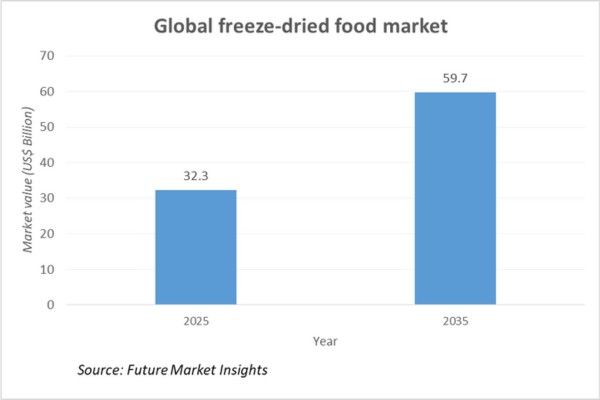
According to a report by Future Market Insights, the global freeze-dried food market is estimated at US$ 32.3 billion in 2025 and is projected to reach US$ 59.7 billion by 2035, reflecting a CAGR of 6.3%.
 The key market trends shaping this industry include:
ââ€â€Ã‚ Growing focus on sustainability is fuelling the adoption of eco-friendly and compostable packaging solutions.
ââ€â€Ã‚ Demand for whole freeze-dried fruits is rising in B2B segments, especially in cereals, bakery goods, and confectionery products.
ââ€â€Ã‚ Freeze-dried meat and protein offerings are increasingly incorporating global flavours and traditional culinary influences.
ââ€â€Ã‚ Technological advancements, such as vacuum freeze-drying and controlled ice nucleation, are enhancing product quality and process efficiency.
ââ€â€Ã‚ The rising trend of online shopping marks a significant shift in the market, largely fuelled by the enhanced convenience and accessibility that e-commerce offers to consumers.
The market has grown significantly over the past decade, driven by the rise of e-commerce. Online platforms like Amazon, Alibaba, and eBay, have improved access to regional and international brands, boosted by increased smartphone usage and the convenience of online shopping. With features like customized assistance and product recommendations, online shopping has become a preferred option for consumers.
The global freeze-dried food market is segmented by product type, nature, and form. Product types include fruits (strawberry, raspberry, pineapple, apple, mango), vegetables (carrot, potato, corn, pea, mushroom), dairy, meat and seafood, pet food, and prepared meals. Fruits are the most profitable segment, driven by demand in snacks, cereals, baked goods, and nutritional products, with strawberries and apples leading due to their versatility, natural sweetness, and nutrient retention.
In terms of nature, conventional products dominate for their affordability and availability, while organic options, though growing in popularity, face price and supply constraints.
By form, powdered freeze-dried foods are expected to lead, favoured for use in beverages, baby food, and functional nutrition due to their solubility, shelf life, and convenience.
However, the industry also faces certain challenges like-
ââ€â€Ã‚ Freeze-drying technology is energy-intensive and capital-heavy, limiting access for smaller producers.
ââ€â€Ã‚ Price sensitivity in developing regions hinders adoption of premium products, and stringent environmental regulations in Europe add compliance costs.
ââ€â€Ã‚ Consumer awareness remains low in rural and low-income areas, limiting demand growth.
Despite these challenges, the market's versatility, health benefits, and expanding applications across foodservice and retail sectors continue to drive global opportunities.
Snapshot of Freeze-Dried Food Market in India
Freeze-drying provides an excellent method for preserving meals while retaining their original taste, making them perfect for enjoying a comforting, home-style dish anytime. In India, the freeze-dried food market is witnessing steady growth, driven by- changing lifestyles; a rising demand for convenient, long-shelf-life foods; and the growing appeal of healthy snacks. Urbanization, rising income, and growing awareness of nutritious food preservation are further boosting consumer interest in freeze-dried meals, fruits, and vegetables. Technological advancements in freeze-drying, and the demand for nutrient retention in packaged foods are also contributing significantly to the market's expansion.
India is witnessing a shift in food preservation methods, with freeze-drying emerging as a game-changer. Traditional storage techniques are proving inadequate in the face of the country's tropical climate, where high humidity, temperature fluctuations, and monsoons accelerate food spoilage. Freeze-dried foods address these challenges by offering long shelf life without refrigeration, making them especially valuable in rural regions with unreliable electricity.
 The method is well-suited for a wide range of Indian foods, from spices and vegetables to fruits and prepared meals- Rice, lentils, vegetables, and even traditional curry bases, all while retaining their taste and nutrition.
Additionally, India's vast geography makes food distribution costly and complex. Freeze-dried products reduce cold chain dependency, lowering logistics costs and maintaining product quality across long distances. The technology also supports India's growing food processing industry, backed by government incentives.
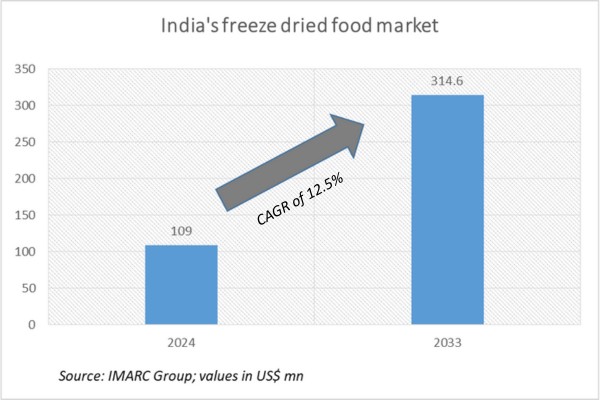
The freeze-dried food market in India stood at US$ 109 million in 2024 and is expected to surge to US$ 314.63 million by 2033, registering a CAGR of 12.5% between 2025 and 2033, as per a report by IMARC Group.
Notably, India's freeze drying equipment market was valued at US$ 343.75 million in 2023. According to a report by Market Research Future (MRFR), it is projected to grow from US$ 450.0 million in 2024 to US$ 1,050.0 million by 2035, registering a CAGR of 8.01% during the period 2025- 2035.
Growing demand for clean-label, minimally processed, and additive-free products is a major catalyst. Consumers increasingly prefer plant-based and organic snacks, prompting new brands to offer innovative combinations, including unique fruits and dairy-free alternatives, to meet evolving consumer tastes and dietary choices.
The expanding retail and e-commerce networks are making freeze-dried foods more accessible to consumers across India. Simultaneously, the food service sectorâ€â€spanning quick-service restaurants and cloud kitchensâ€â€is adopting these ingredients to streamline operations and reduce food waste. Backed by rising investments in food processing infrastructure, these trends are set to accelerate the growth of India's freeze-dried foods market.
Considering this remarkable confluence of trends, freeze-drying offers India a competitive edge in both domestic and export markets, reshaping its food security and trade landscape.
LATEST RELEASE